
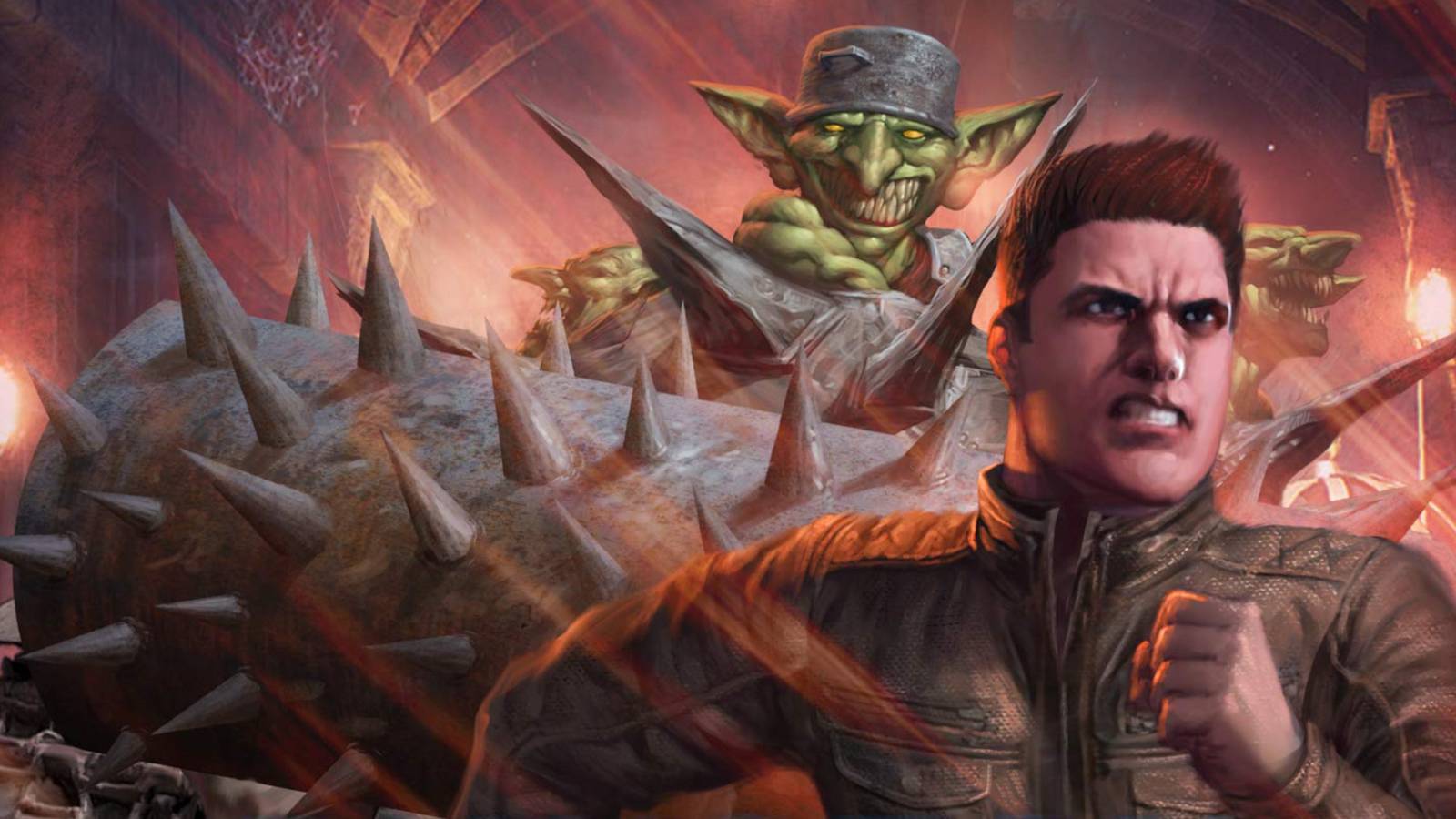
A critic has declared that eight other fictional worlds are more original than the one Dungeon Crawler Carl occupies, which is a bit like telling a fish its pond is unremarkable while pointing at a glass of water. According to a recent editorial, our beloved collapsing dungeon, with its exploding goblins, sapient cats, and corporate-sponsored murder floors, apparently lacks the personality of *Blade Runner 2049* and the narrative relevance of *Dark City*. The piece argues that while the series has entertaining moments, its world feels derivative of tabletop roleplaying games and science fantasy, making it forgettable next to the likes of *Spirited Away* and *The Matrix*. This is, of course, a fascinating take, and one that completely misses the point of what makes a dungeon crawl work, but we will address it in good faith.
For context, we recently reported that the Peacock adaptation is waiting while the author writes, and that narrator Jeff Hays had to defend Donut from questions about her appeal. The timing of this comparison piece is instructive: the series is being judged as a cinematic universe before a single frame of the show has been shot. The editorial compares the dungeon to *Star Wars: The Empire Strikes Back* and *Dune: Part Two*, which had decades of filmmaking history and hundreds of millions of dollars in visual effects budgets to build their worlds. The dungeon, meanwhile, is a procedurally generated death trap that changes every floor, designed by a petty AI who is actively trying to kill its inhabitants. The complaint that it lacks the "aged history" of the Star Wars galaxy is like complaining that a roller coaster lacks the narrative depth of a novel. It is a different experience.
What the editorial gets right, unintentionally, is that the dungeon's world is derivative by design. The entire conceit of the series is that Borant Corporation and the Syndicate have built a game show that borrows from every fantasy trope imaginable, because that is what the audience wants to watch. The dungeon is not supposed to be an original world in the sense that *Spirited Away* is original; it is a cynical, corporate product designed to maximize drama and loot drops. The *Ready Player One* comparison is actually the most revealing: both properties are overt about their influences, but the editorial praises Spielberg's film for its "post-apocalyptic landscape" while dismissing the dungeon for the same quality. The dungeon is a post-apocalyptic reality show where the apocalypse happens every twelve hours. The editorial's chosen examples, *Dark City*'s perpetual night, *Dredd*'s single apartment block, *The Matrix*'s simulated reality, are all constraints that create tension. The dungeon is a constraint that creates tension, survival, and a very specific kind of dark comedy. If the critic prefers the grim tone of *Blade Runner 2049*, they are welcome to it. But calling the dungeon forgettable because it does not look like a Ridley Scott film is like calling a chainsaw forgettable because it does not look like a samurai sword. The tool is not the problem; the application is. The real question is whether the Peacock adaptation will lean into the dungeon's absurd, game-show logic or try to make it look like *Dune*. If it chooses the latter, the editorial will have been right about the wrong thing.