
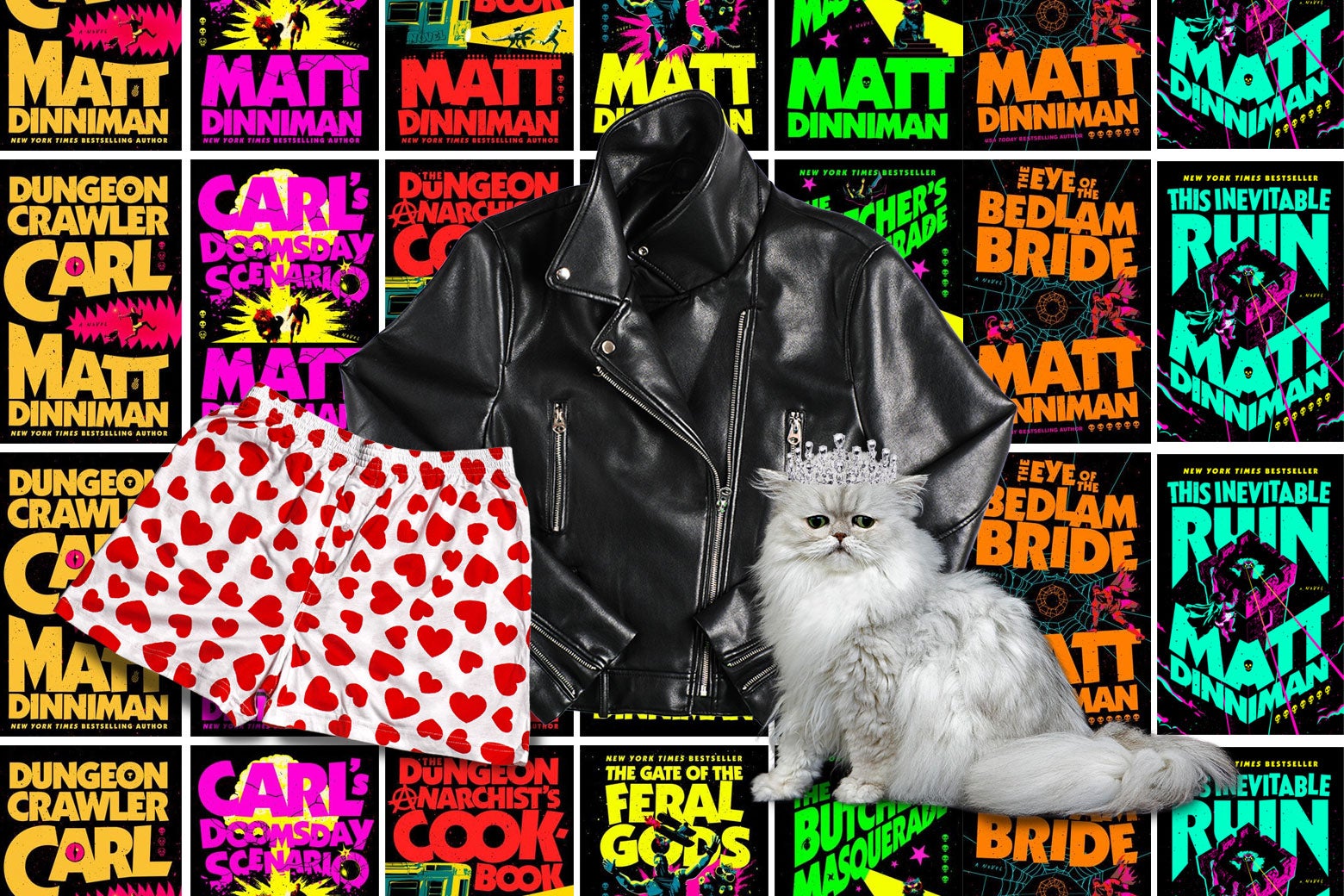
Please be advised: A contagion has been identified, and it spreads not through coughs or bites but through book recommendations. The New York Times has confirmed what any bookseller already knows: Matt Dinniman's *Dungeon Crawler Carl* series is converting non-gamers, retirees, and literary fiction readers into crawlers at an alarming rate. We have reviewed the evidence, and we are, I suppose, reluctantly impressed. The series has sold more than 6 million copies, the eighth book arrives in May, and a TV adaptation is in development at NBCUniversal. For those of you who have been living under a rock on the first floor, the *Times* piece includes the testimony of a 68-year-old woman named Janiece Mulia, who was forced to listen to an audiobook on a car trip and now owns all seven books, the digital editions, and a Patreon membership. This is the demographic the dungeon was designed to consume, and it is consuming them instead.
The *Times* reporter correctly identifies the engine of this conversion: the audiobooks narrated by Jeff Hays, whose voice work for the series' dozens of characters outsells print and e-book combined. Hays has created distinct profiles for men, women, cats, gnomes, humanoid goats, and people made of rock and lava, and the result sounds like a full cast even though it is one man. This is the kind of loot that cannot be found in a box, and it explains why the series has found its ideal form in audio. The physical merchandise, meanwhile, is a separate economy entirely. As we reported last year, NYCC Attendees Chase $2,000 Carl Comics in Free Giveaway, with those free comics reselling for sums that would buy a decent enchanted war gauntlet. And the Dungeon Crawler Carl Toys at NYCC previewed a physical loot ecosystem that the *Times* article does not mention, but that the fans at that convention were already chasing. The franchise is no longer just a book series. It is a dungeon with multiple floors.
The *Times* piece dwells on the absurd premise, a man in heart-patterned boxer shorts and a leather jacket, coaxing a cat out of a tree as the world ends, and on the gonzo fan costumes, which include a well-armed Jesus and a fanged severed sex-doll head. These are the distractions the audience loves to watch. But the underlying mechanics are what hold the non-gamer readers. The LitRPG system, with its stat blocks and loot boxes and experience points, is alienating on paper and addictive in practice. The *Times* reporter admits to finding the Iron Tangle, the third book's all-subway level, difficult to visualize, and Dinniman himself included an author's note acknowledging the same. This is the point. The series is not designed for perfect visualization. It is designed for momentum, for the feeling of a timer counting down and a floor collapsing. That is the same feeling that drives a 68-year-old to buy seven books in a genre she had never heard of.
The practical takeaway for our readers is this: the *Dungeon Crawler Carl* audience is no longer a niche of LitRPG enthusiasts. It has absorbed the book club crowd, the audiobook commuters, and the people who only read one series a decade. The TV adaptation, when it arrives, will inherit an audience that already knows the stat system, the voice profiles, and the exact color of Carl's underwear. The collapse timer is set, and the crawlers are already inside the dungeon. They just call it a reading list.